
Opening Rust's server browser for the first time can leave you wondering where to start. So many different server types exist, each with its own population, rules, and wipe schedule. Picking the wrong one could mean spending your first hour getting sent back to the beach instead of learning how to survive.
Choosing the right Rust server depends on how you want to experience the game. Some players enjoy jumping straight into competitive PvP, while others would rather learn building, crafting, and monument puzzles without constantly fighting experienced players.
In this guide, we'll explain the different server types, what to look for before joining, and which options make the most sense for beginners.
What Are The Different Types Of Rust Servers?
Rust's server browser separates servers into three main categories: Official, Community, and Modded. Each offers a different experience, although individual servers within the same category can still have very different rules.
Official Rust Servers
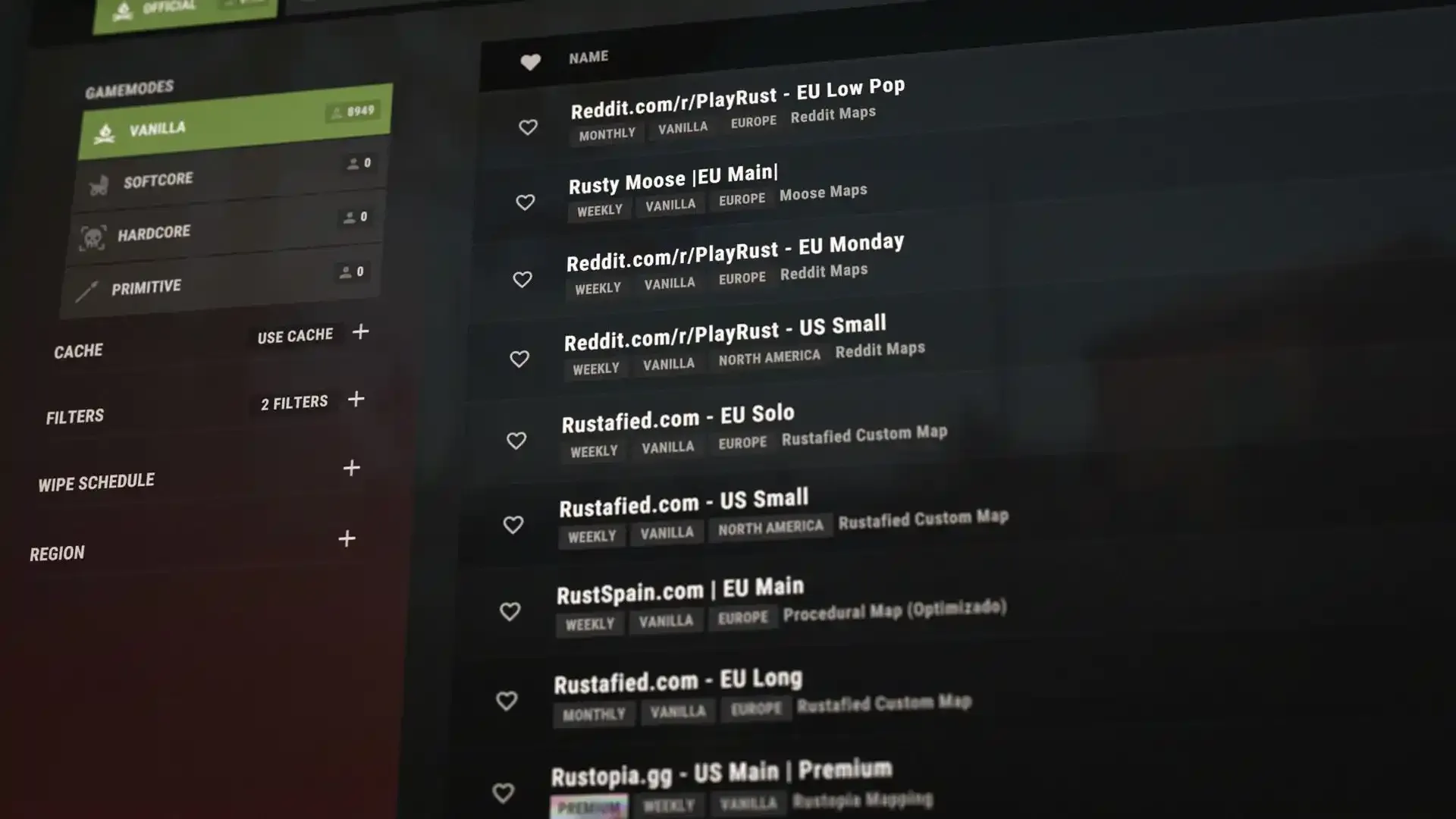
Official servers provide the standard Rust experience, with normal resource gathering, progression, building, and PvP mechanics.
These servers are often popular with experienced players and larger groups. Joining a 400-player server immediately after a wipe can be particularly unforgiving, with players competing for building locations, resources, and monuments from the beginning.
However, not every Official server is heavily populated. You can still find quieter options, and some official game modes offer a different experience from standard vanilla Rust.
If you're comfortable learning through combat and don't mind losing progress occasionally, Official servers are a perfectly reasonable place to begin.
Community Rust Servers
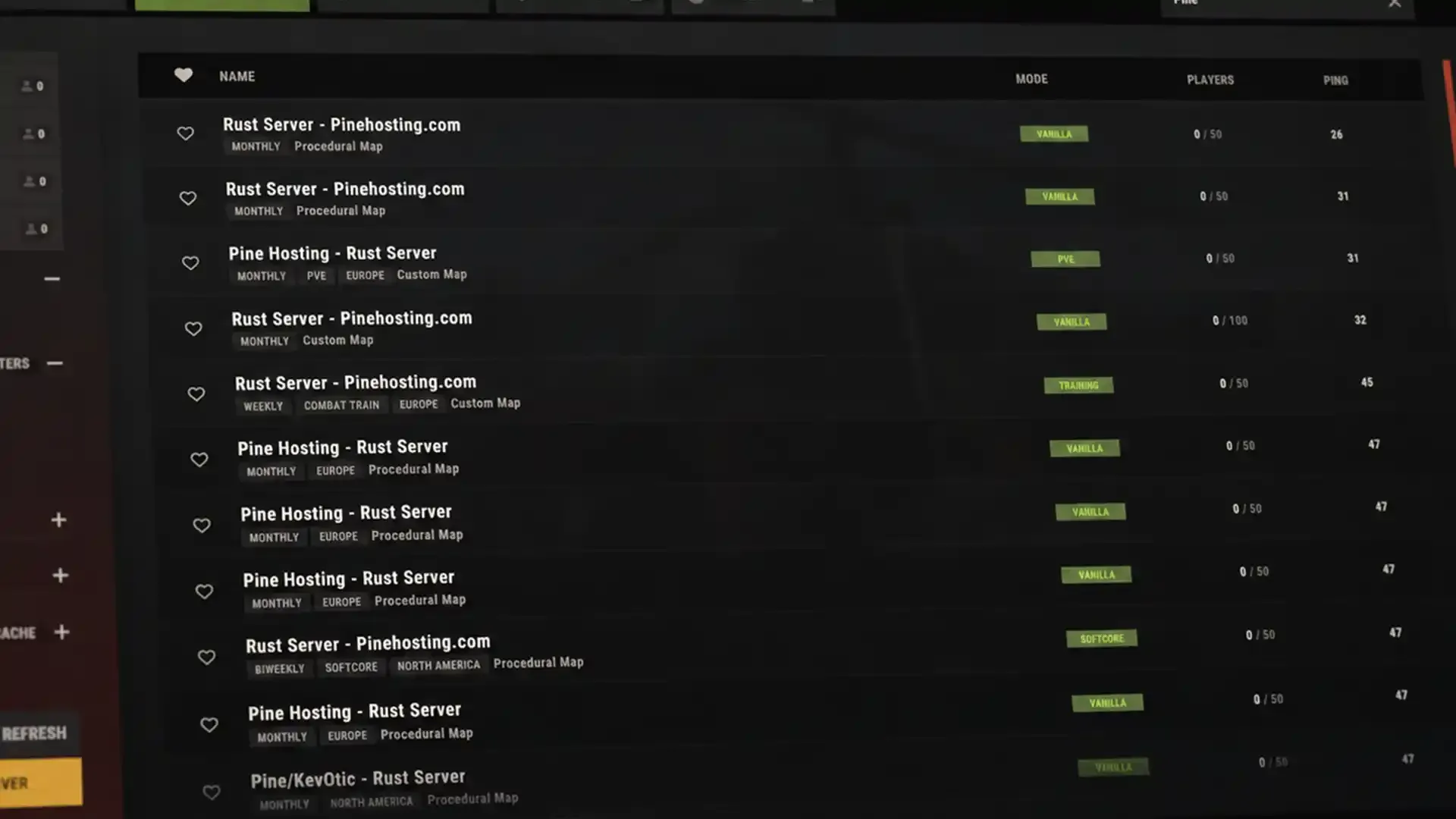
Community servers are operated by independent server owners and generally stay close to vanilla Rust gameplay.
They can introduce their own player rules, team limits, wipe schedules, and moderation policies without significantly changing the game's core mechanics.
For beginners, a lower-population Community server can be a good starting point. You'll have more opportunities to explore monuments, build your first base, and experiment with equipment before encountering other players.
However, Community doesn't automatically mean beginner-friendly. Some servers are just as competitive as Official ones, so checking their rules and population is important.
Modded Rust Servers
Modded servers are also community-operated, but the main distinction between Community and Modded Rust servers comes down to the use of gameplay-changing plugins and modifications.
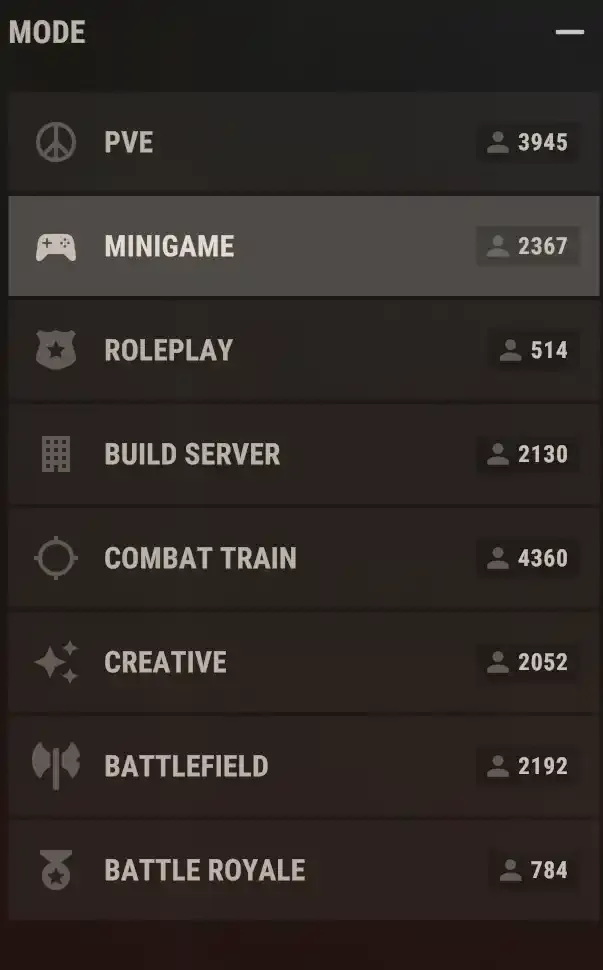
Some examples include 2x, 5x, or 10x resource gathering servers, where players collect materials much faster than normal. Others introduce starter kits, custom events, teleportation systems, or completely different progression mechanics.
These servers can be more convenient for beginners who don't want to spend hours gathering resources. However, faster progression also means opponents can obtain weapons and explosives much sooner.
Modded servers also offer experiences beyond traditional PvP. Roleplay communities, PvE servers, creative building worlds, and combat training servers allow players to enjoy Rust in different ways.
If you're more interested in building, social interaction, or practicing specific mechanics, these servers may be more enjoyable than traditional survival gameplay.
What Should You Look For Before Joining A Rust Server?
Before selecting a server, there are several things worth checking in Rust's server browser.
- Player population: Lower populations generally mean fewer encounters, giving beginners more freedom to explore. Very quiet servers may offer little player interaction, though.
- Team limits: Solo, Duo, and Trio servers restrict group sizes, making them worth considering if you don't want to encounter large clans.
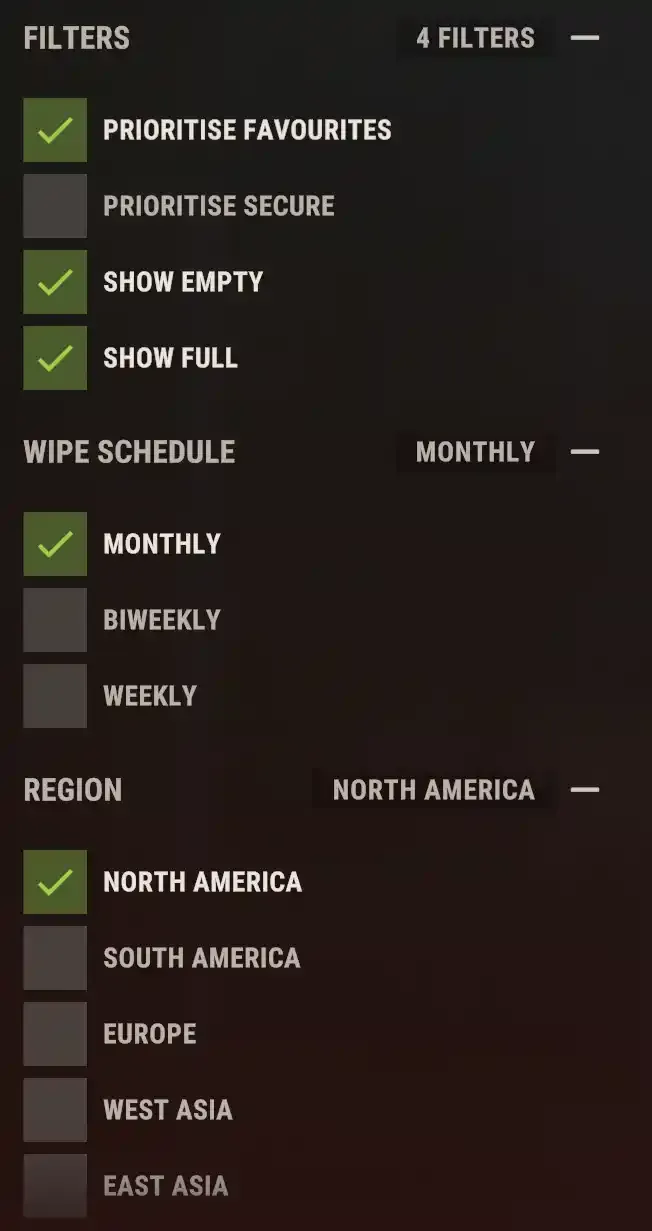
- Wipe schedule: Weekly servers reset frequently, while monthly servers allow more time to build and progress. Your preferred Rust wipe schedule depends on how often you plan to play.
- Server location: Choose a server relatively close to your region for better latency and more responsive gameplay.
- Rules and moderation: Look for clear server rules, active administrators, and communities that explain what players should expect.
You can find these details by opening Rust, selecting Play, and browsing the Official, Community, or Modded server lists.
Use the search bar and available filters to narrow your results. Terms such as Solo, Noob Friendly, PvE, or 2x can help you find servers offering particular experiences.
Rust's server browser tags can also identify features such as Softcore, Roleplay, Combat Training, Premium servers, wipe frequency, and more.
What Is The Best Rust Server For Beginners?
For someone completely new to Rust, a low-to-medium-population Community server with vanilla gameplay and reasonable team limits is generally a good starting point.
This allows you to learn the game's core mechanics without changing how everything works. You can practice building, gathering, crafting, and completing monuments while still encountering enough players to experience Rust's PvP systems.
If you're joining alone, a Solo or Solo/Duo server may also be worth considering, as it reduces the likelihood of fighting much larger groups.
However, this isn't the only way to learn Rust.
If you mainly want to improve your PvP skills, joining a more populated server can give you considerably more combat experience. You'll probably die more often, but you'll also encounter other players much more frequently.
For players who dislike grinding, a 2x Modded server can offer a reasonable balance between normal Rust progression and faster resource gathering.
And if you simply want to experiment with building or explore the game without being raided, a PvE or creative server might be exactly what you're looking for.
Can You Learn Rust By Creating Your Own Server?
Yes! If you're still unsure which server to join, creating your own private Rust server is another option.
Having your own server allows you to learn at your own pace without worrying about other players destroying your base or interrupting you while you're experimenting.
You can explore monuments, practice building designs, test weapons, and understand the crafting system before joining a more competitive community.
With Rust hosting from a provider such as Pine Hosting, you can create your own dedicated server and control who joins, the server settings, map, and wipe schedule.
Of course, playing alone won't teach you everything about Rust's PvP or player interactions. However, it can be an excellent way to become comfortable with the game's mechanics before experiencing them on a populated server.
Choose The Rust Experience That Suits You
There's no single best Rust server for everyone. A new player might enjoy a quiet Community server, while someone who loves competitive survival could prefer a busy Official wipe. Modded servers offer even more possibilities, from fast-paced PvP to relaxing roleplay communities.
The important thing is finding an experience you actually enjoy. Don't feel pressured to join a 500-player server simply because that's where experienced players are playing.
And if you'd rather learn everything at your own pace, our Rust server hosting allows you to create and customize your own server without managing the technical infrastructure yourself.
With our beginner-friendly Easy Config, Plugin Installer, automatic wipe scheduling, high-performance hardware, and DDoS protection, you can build a server that suits your preferred playstyle.
Start small, experiment with different settings, and invite your friends whenever you're ready.