

Project Zomboid Build 42 has officially reached the public stable branch. Released on July 29, 2026, version 42.20 brings the update’s expanded map, deeper crafting, animals, multiplayer improvements, and visual overhaul to players who remained on Build 41 throughout the unstable testing period.
The latest stable version is now 42.20.2 following two post-release hotfixes. Whether you are starting a solo run or updating a Project Zomboid server, here is what changed and what you should know before moving to the new build.
A Much Larger And More Detailed Knox Country
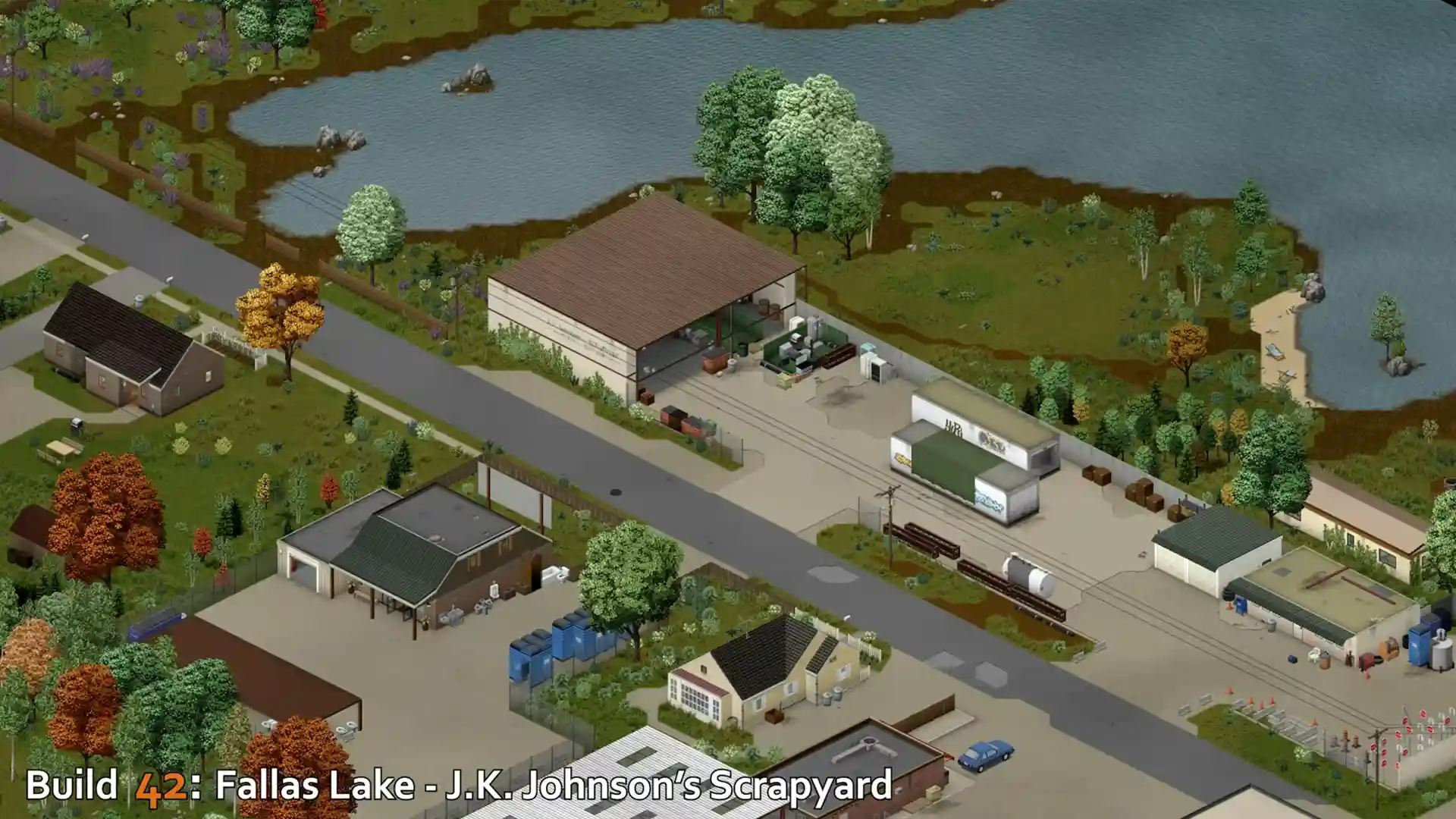
One of the biggest additions in the Build 42 Project Zomboid update is the expanded map. Knox Country’s surface area has doubled compared with Build 41.
Ekron, Irvington, and Brandenburg join the map as new towns, while Riverside, West Point, Rosewood, Fallas Lake, Muldraugh, Ekron, and Dixie have received major redesigns. Build 42 adds 1,400 unique buildings and 20,000 new tiles, giving towns more distinctive layouts, architecture, and landscaping.
The map is also more vertical. Procedural and handcrafted basements can contain bunkers, panic rooms, and other hidden spaces, while some Louisville skyscrapers now extend as high as 32 floors. Beyond the established towns, randomized wilderness gives players more room to build remote survival camps.
Animals, Farming, And Long-Term Survival
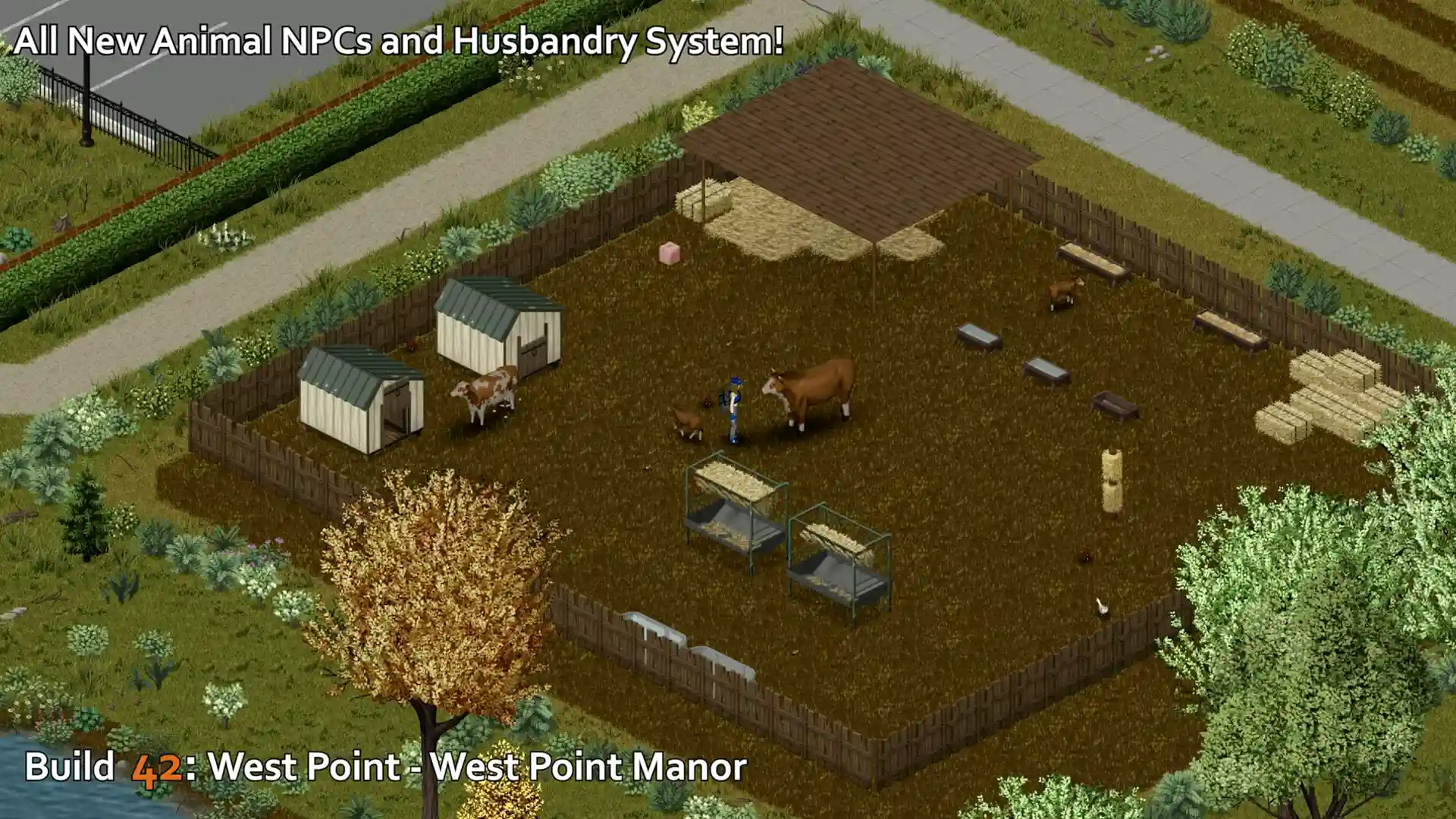
Build 42 introduces domestic and wild animals, including chickens, cows, pigs, sheep, deer, rabbits, rats, and raccoons. Survivors can raise livestock for milk, eggs, meat, leather, and manure, while wild animals can be tracked through footprints and droppings.
Farming has also become more seasonal. New crops and herbs have optimal planting periods and more realistic growth times, making long-term food planning more important. Fishing is now interactive, with visible signs of fish activity, noise that can frighten fish away, and craftable chum that attracts them.
Together, these systems give late-game communities more ways to become self-sufficient instead of relying almost entirely on supplies collected during early looting runs.
Crafting, Building, And Combat Changes
The new crafting system supports searchable recipes, selectable ingredients, and batch crafting. New disciplines such as blacksmithing, masonry, carving, and knapping expand what survivors can produce after manufactured supplies become scarce. Workstations, food-preservation methods, shelters, clay and stone walls, and additional wooden structures provide more options for building a lasting base.
Weapons have changed too. Some melee weapons now track the condition of their head and handle separately, as well as blade sharpness. Firearms received new models, animations, sounds, and ammunition types, alongside a more precise aiming system affected by panic, stress, and character skill.
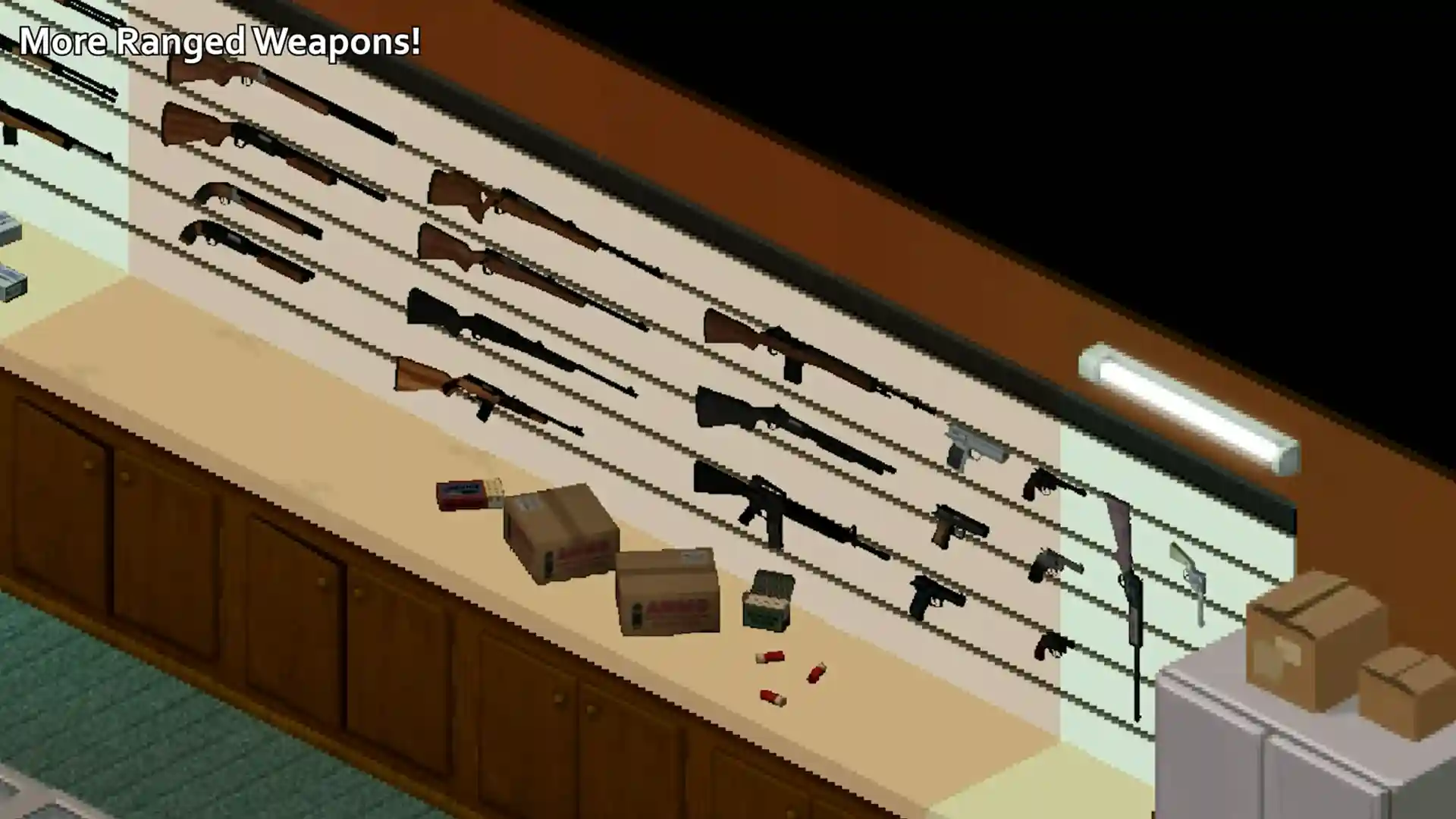
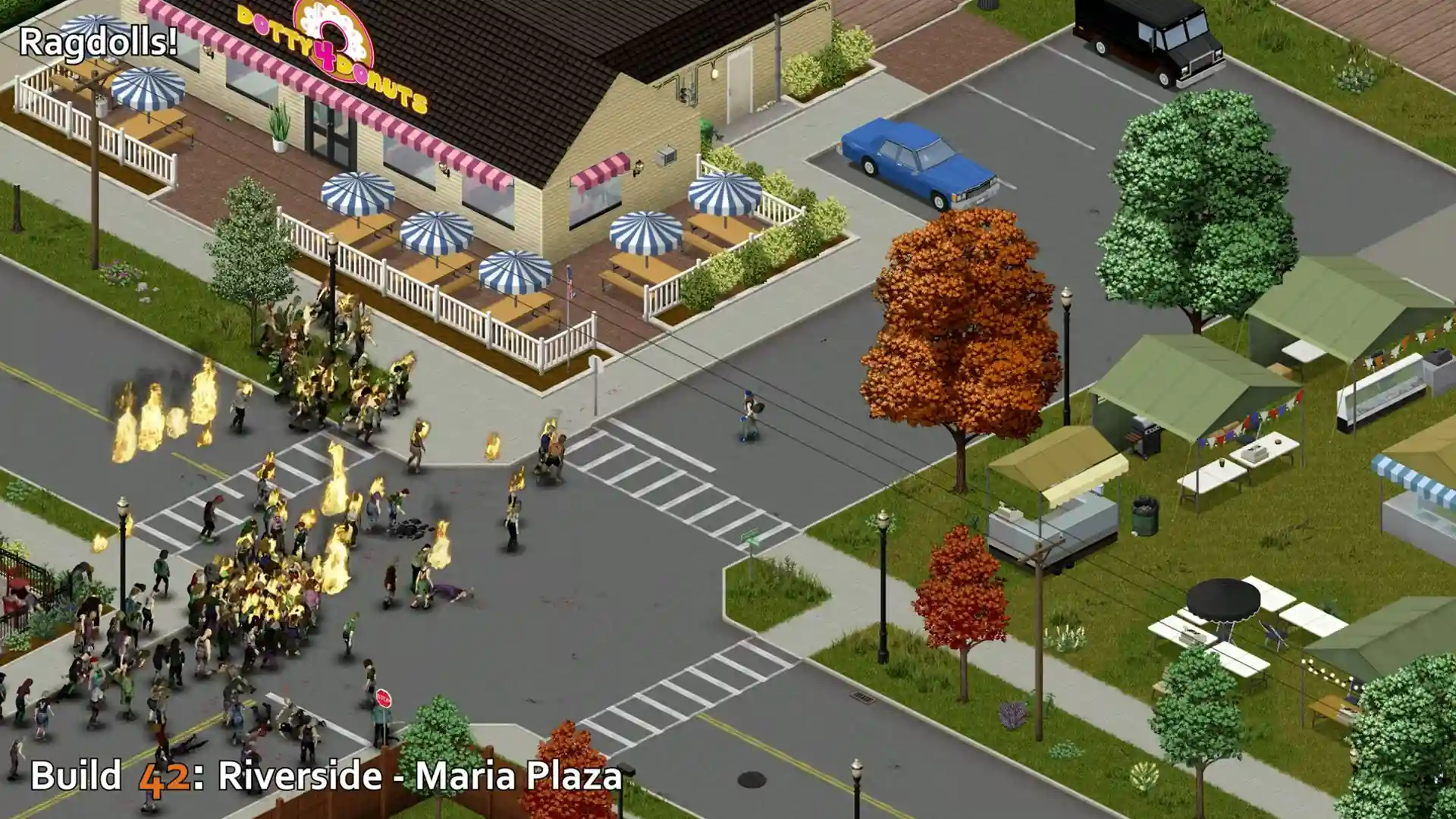
Other notable improvements include darker and more realistic lighting, zombie ragdolls, dynamic music, character vocals, customizable controller bindings, expanded lore, and a new 3D item-placement system.
Build 42 also refreshes the available game modes. Apocalypse remains the core experience, while Outbreak accelerates progression, Rising offers a calmer survival game, and Extinction increases the difficulty. Custom Sandbox receives more detailed controls for animals, basements, loot, and zombie behavior, giving both solo players and server admins more ways to shape a world.
Build 42 Multiplayer And Server Improvements
Project Zomboid Build 42 multiplayer moves important systems to the server. Inventory transfers, container interactions, loot distribution, and TimedActions are now server-authoritative, while anti-cheat checks cover behavior such as speed, hits, noclip, and inventory manipulation. The server browser can also filter modded, full, or empty servers and sort results by ping or player count.
The built-in mod manager makes modded play easier by displaying dependencies and incompatibilities, supporting load-order changes, and allowing players to save and share presets. However, server owners should still confirm that every Workshop mod supports Build 42 before enabling it.
The 42.20.1 hotfix fixed a chunk-unloading problem that caused major performance issues on multiplayer servers, particularly high-population worlds. It also improved Lua checksum validation, fixed temporarily disappearing vehicles, and addressed a memory leak that could degrade performance or cause crashes over time.
The smaller 42.20.2 hotfix corrected percent-symbol handling in mod files and added extra memory debugging information. Both hotfixes are compatible with existing 42.20 save files.
Do Build 41 Saves And Servers Work In Build 42?
No. Build 41 saves and Project Zomboid server worlds are not compatible with Build 42. Unstable 42.19 saves are also incompatible with 42.20 because of the added map content.
Players who want to remain on Build 41 can select the legacy41 beta through Steam. Those continuing an unstable 42.19 world can choose the 42.19 branch instead. Before updating a server, create a complete backup, verify mod compatibility, and expect to begin a new Build 42 world.
Start A Build 42 Server With Pine Hosting
Build 42 adds a larger world, more server-side simulation, and deeper systems for long-running multiplayer communities. Reliable Project Zomboid hosting can simplify the move to the new stable branch while keeping server files, settings, and mods manageable.
Pine Hosting’s Project Zomboid hosting includes instant deployment, DDoS protection, 24/7 support, and a custom game panel with configuration and scheduling tools. Servers update after a restart, while Workshop mods can be installed and managed through the panel.
Whether you are creating a private co-op world or a public community, Pine Hosting offers dedicated Project Zomboid hosting designed to keep your server online and easy to control. If you are comparing the best Project Zomboid hosting options for Build 42, explore Pine Hosting’s plans and start your next Knox Country survival story.