

Coming home with a full inventory feels better when there's somewhere to put it all. A good village gives you food, a fire and a place to repair your gear. Then there's room for the projects you want to build just because they'd look good.
Whether you're playing alone or sharing a Valheim server, start with the buildings you'll use most. These Valheim village ideas bring the daily jobs closer together and leave space for a settlement that feels like yours.
Essential Buildings Every Valheim Village Needs
Main Hall And Resting Area
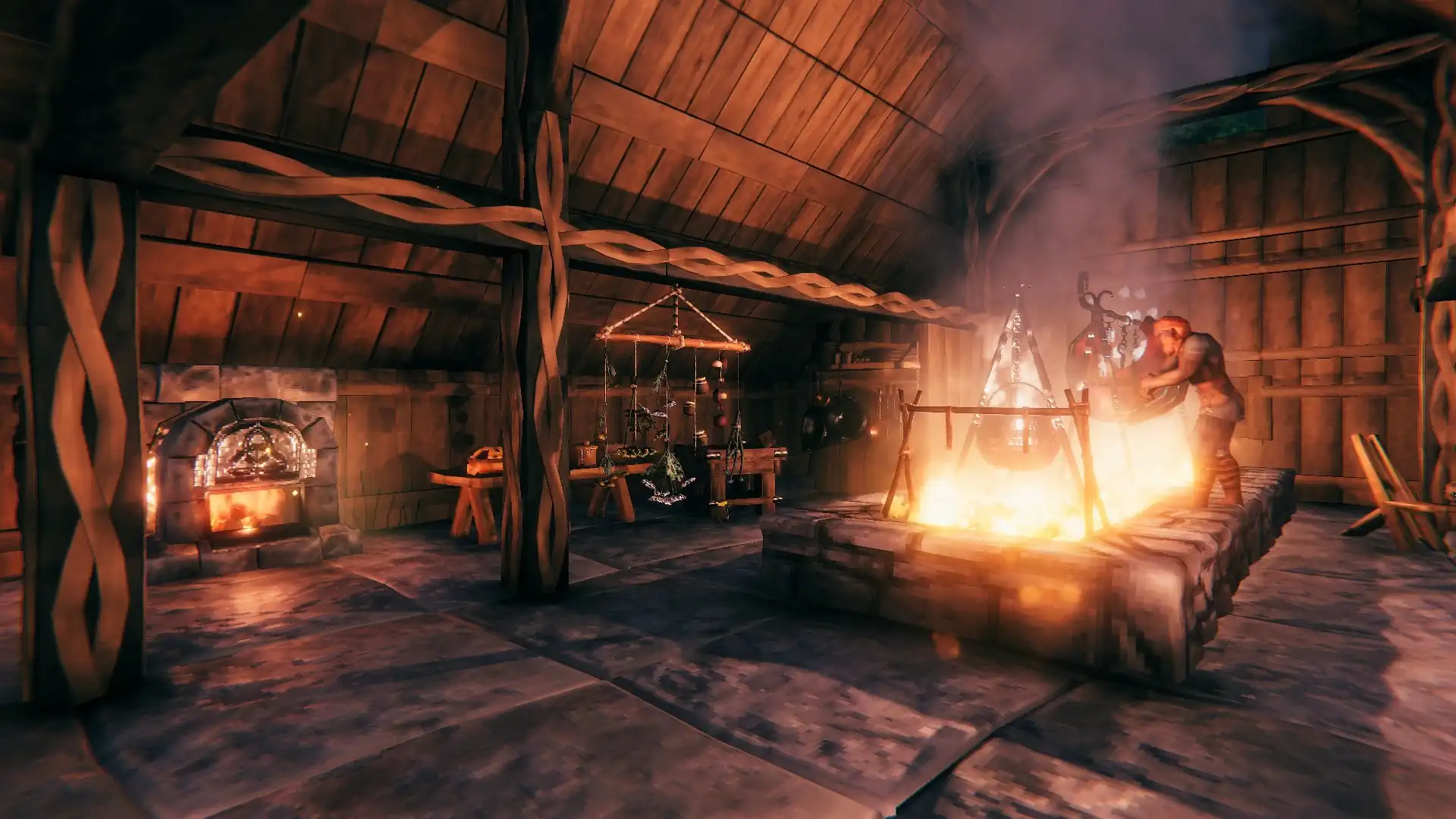
Build the main hall where people will pass through it. Beds, a dining area and a sheltered fire make it a shared home while the village takes shape. Bedrooms can go upstairs, leaving the ground floor for meals and resting.
Furnish the resting area with rugs, banners and seating, then check its comfort level. Comfort affects how long the Rested buff lasts. Leave a chimney opening so smoke can escape, and keep cooked food, meads and spare gear near the entrance. That also gives someone recovering from a death a place to prepare.
Village Layout And Paths
A simple starting layout puts the hall near the center, with crafting and storage nearby. Farms and animal pens can sit farther out, within your defenses. Leave space between these areas for paths, gates and homes your friends might add.
Make the busiest routes wide enough for a loaded cart. Test the gaps before finishing the buildings, then add covered walkways along your regular footpaths to keep you dry.
Crafting Workshops, Forges, And Storage Areas
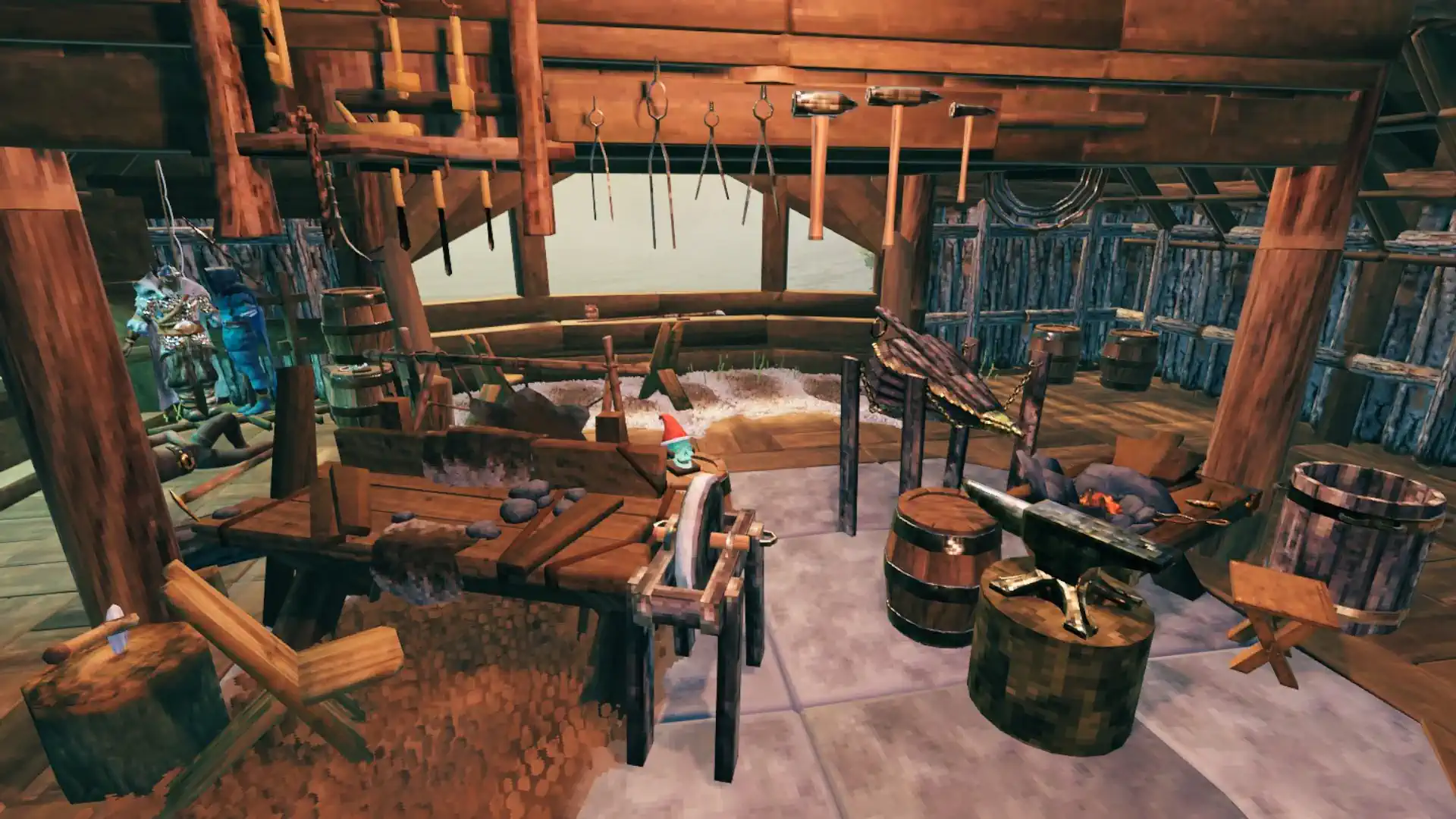
Put the workshop beside the warehouse, or combine them under one roof. You'll need materials in your inventory for unmodded crafting, so store wood near the workbench and metal near the forge. Clear labels help everyone return supplies to the same place.
A drop-off chest lets returning players unload mixed loot. Leave room around the stations for upgrades. If an extension goes beneath a raised floor, check that it connects before closing the floor.
For metal deliveries, place charcoal kilns, smelters and coal between the dock and warehouse. Keep a clear route through this yard so you can unload, process metal and move it into storage without squeezing past stations.
Once the working areas are settled, you can add separate woodworking or masonry shops. Timber stacks, stone piles and spare furniture outside help show what each building is used for.
Farms, Animal Pens, And Food Production
Kitchen And Crops
A kitchen beside the hall keeps meals close. Put ingredient chests near the cooking stations and prepared food where everyone can reach it. Chests accessible from both rooms let the cook restock without blocking hungry players.
Leave space for cauldron upgrades and later cooking equipment. Fermenters need a roof and enough cover from walls, so a brewing room beside the pantry keeps drinks close without crowding the kitchen.
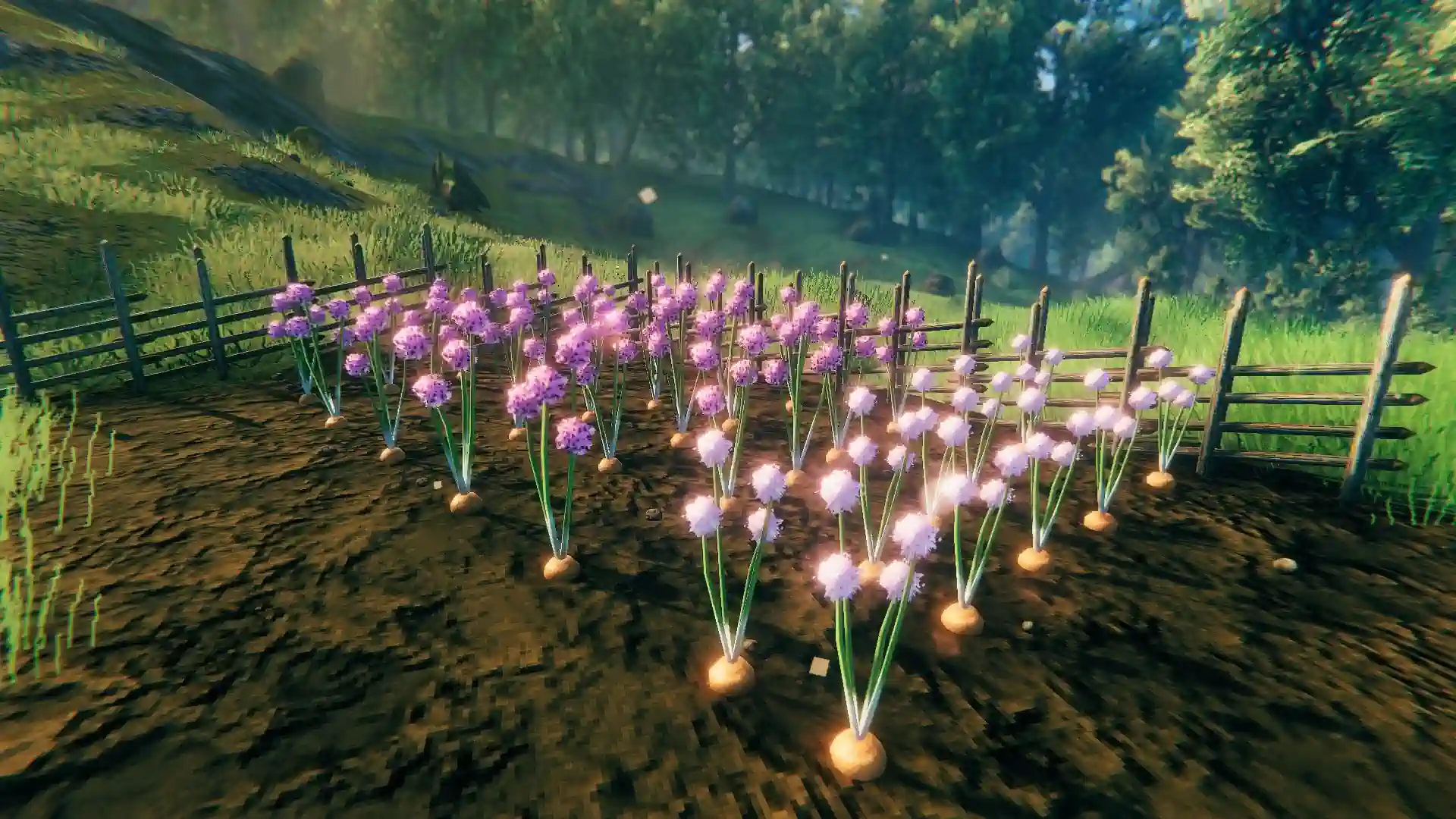
Put a garden near the kitchen for carrots, turnips and onions. Use cultivated soil, give plants enough space and keep the plot open to the sky. Save part of each harvest for replanting and seed production. Barley and flax need a Plains farm, which you can reach by portal if your village is in the Meadows.
Animal Pens And Beehives
Alongside the fields, leave room for animal pens within your defenses. Gates and feeding access make the daily jobs easier, while spare space allows the herd to grow. Walls won't stop every raid threat, so consider what could reach the livestock. Beehives can sit near the garden where they have enough open space. Check that the bees are happy before adding more.
Harbors, Portal Hubs, And Transportation
Harbor Layout And Roads
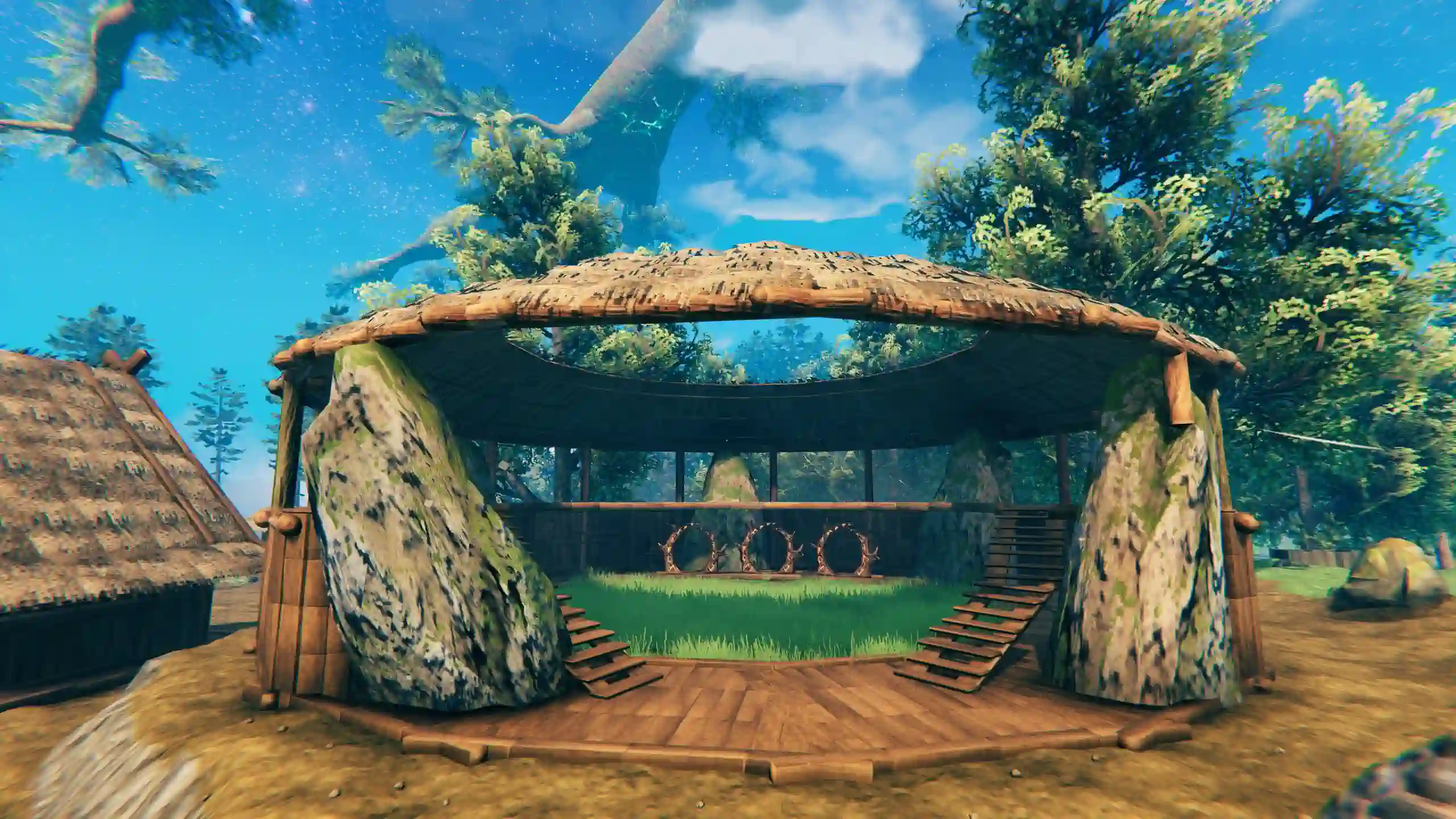
Choose a landing spot before building the harbor. Boats need clear water to approach, and a loaded cart needs a usable road back to storage. Test both while the area is bare, especially slopes and narrow gates.
Keep the unloading area close to the foundry and warehouse. A small cart barn nearby gives players somewhere to park without blocking the road.
Portal Hubs
Put the portal hall between storage and the main hall. Returning players can unload, repair and eat along one route. A cartography table near the entrance makes it easier to share discoveries before heading inside.
Name destinations clearly and leave room for new links. Under normal portal rules, basic portals block metal ores and bars; stone portals allow their transport later. World modifiers can change those restrictions, so plan your routes around your world's settings.
Extra Buildings To Make Your Valheim Village Feel Alive
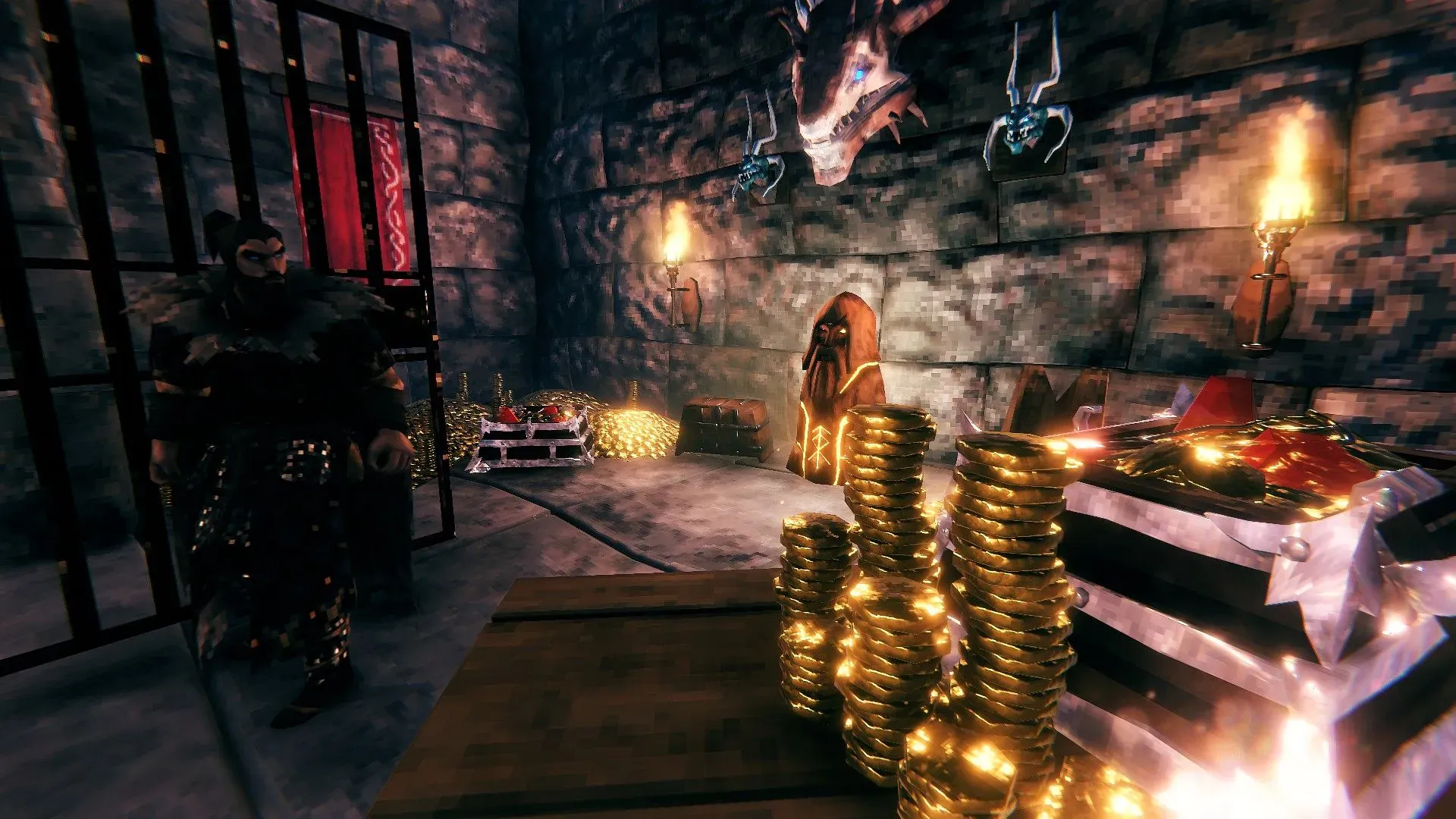
A market square brings smaller shops together. Build stalls for fish, vegetables or mead, then add a bakery or brewery nearby. Different banners help distinguish the shops.
A trophy hall beside the square gives everyone somewhere to display their achievements. Group trophies by biome and keep retired weapons and armor nearby. Down at the harbor, a fisherman's hut can hold rods and bait, giving players another reason to use the waterfront.
As these areas grow, you may need to move paths or rebuild older houses. Before making major changes, back up your Valheim world. If a mistake damages part of the village, you can restore an earlier version instead of losing hours of building progress.
Build Your Valheim Village With Pine Hosting
Not everyone can play at the same time. Someone might want to finish a roof after work while another has time to harvest before the next group session.
With our Valheim server hosting, your shared world can stay available without anyone leaving their game running. Our panel includes file management and backup tools, so you can look after the world as the village grows.
Choose a Valheim hosting plan for your group, agree on a site and start with the hall, kitchen and workshop. The rest can grow around what you enjoy building together.