

Choosing the best Rust server type is one of the biggest decisions to make before launching a community. Rates, rules, plugins, wipe schedules, and pacing determine which players join and whether they stay.
Some players want the original survival experience. Others prefer faster progression, peaceful building, roleplay, or a heavily customized world. This guide compares the main Rust server types for 2026 and the plugins commonly used for each.
Which Rust Server Type Should You Choose?
There is no single best Rust server type for every owner. Vanilla is best for the traditional experience. A Rust 2x server offers a balanced middle ground, while 5x is designed for faster action. PvE suits cooperative communities, RP focuses on player interaction, and a Rust modded server gives owners the most freedom.
Vanilla Rust Servers
Vanilla servers keep gathering, crafting, loot, combat, and progression close to the standard game. They normally use standard monuments and few or no gameplay-changing plugins.
This style appeals to experienced players who enjoy meaningful farming, slower progression, and high-risk raids. However, it requires more time, which can make it harder for casual players to compete.
A vanilla server does not need gameplay plugins. Owners may still use moderation or logging tools, but features such as teleportation, kits, increased gathering, or custom shops move the experience away from true vanilla.
Rust 2x Servers
A Rust 2x server generally doubles gathering and may also increase stack sizes, smelting speed, or loot. It keeps the core survival loop recognizable while reducing repetitive farming.
This is a strong choice for owners who want both regular and casual players. Bases can be built sooner and players recover from losses faster, but resources still matter.
Common plugins include Gather Manager for collected resources, Stack Size Controller for item stacks, and Quick Smelt for furnace speed. Gather Manager can separately control dispensers, pickups, quarries, and survey resources, which helps create a consistent 2x setup.
Rust 5x Servers
A 5x server pushes Rust toward fast-paced PvP. Players gather quickly, rebuild rapidly, and reach weapons and raiding equipment much sooner. It suits players who want frequent fights without spending most of a session farming.
The same rate plugins used for 2x work here, but 5x servers commonly add more conveniences. Rust Kits can provide starter or cooldown kits, while Economics and GUI Shop can create a currency and shop system.
Teleportation, faster recycling, larger stacks, shorter nights, and improved loot are also common. Avoid setting everything to 5x without testing, especially sulfur, scrap, components, and raid loot, as this can remove progression too quickly.
PvE Rust Servers
PvE servers reduce or remove player damage and raiding. They work well for builders, newer players, friend groups, and communities that prefer cooperation.
True PVE is commonly used to control damage between players, buildings, vehicles, and other entities. Zone Manager can create protected areas or special PvP zones, while Raidable Bases adds bases that players can attack as an alternative raiding challenge.
Events, NPC encounters, quests, PvP zones, and building competitions can give players goals after they finish their main bases.
Rust Roleplay Servers
RP servers focus on interaction, jobs, shops, towns, and player-created stories. Combat may be restricted to specific areas or require a roleplay reason.
Useful plugins include Better Chat for names, groups, and prefixes; Economics and GUI Shop for trading; Zone Manager for towns; Human NPC for interactive characters; and Rust Kits for job equipment or starter items.
RP requires clear rules, active moderation, planned locations, and enough players willing to follow the same style of play.
Fully Modded Rust Servers
A fully modded Rust server can combine increased rates, custom progression, shops, kits, teleportation, events, raid restrictions, PvE systems, and interface changes. This freedom helps a server stand out beyond its map size or gather rate.
Rust plugins normally run through Oxide or Carbon. Facepunch describes Oxide as a popular modding framework, while Carbon is designed as a modern framework with broad compatibility for existing Oxide plugins.
The downside is maintenance. Every plugin adds settings, permissions, dependencies, and potential conflicts. Start with the features that define your server, test them, and add more only when they improve gameplay.
How Dedicated Rust Hosting Makes Modded Servers Easier
Self-hosting usually means installing the server, configuring networking, adding Oxide or Carbon, uploading plugins, editing JSON files, assigning permissions, handling updates, and keeping the machine online.
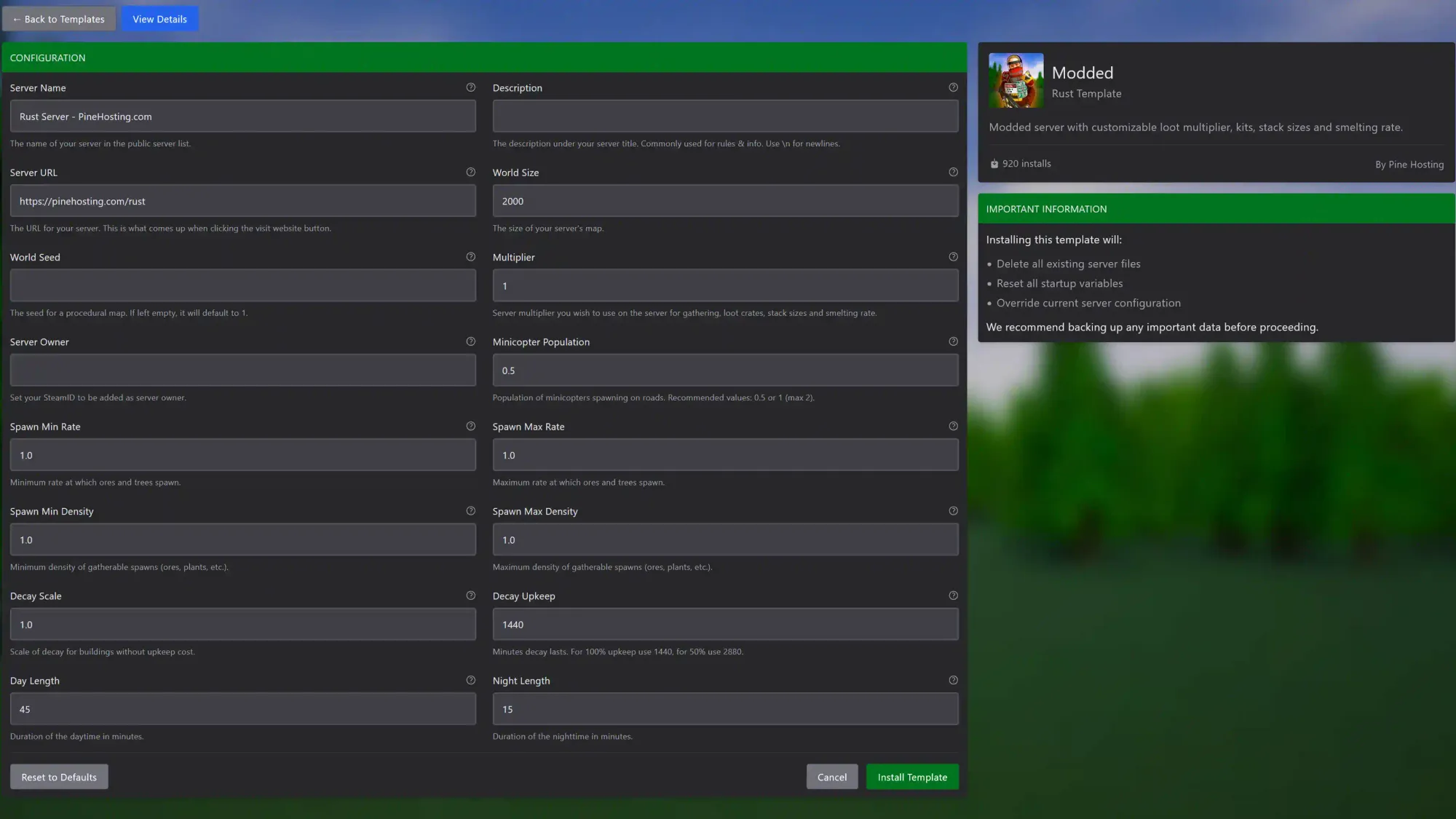
Dedicated modded Rust hosting removes much of this work. Pine Hosting provides prebuilt Community, Modded, and Modded Pro templates based around commonly used setups. Instead of starting from scratch, you can select a Rust server modded template and adjust supported settings through a visual interface.
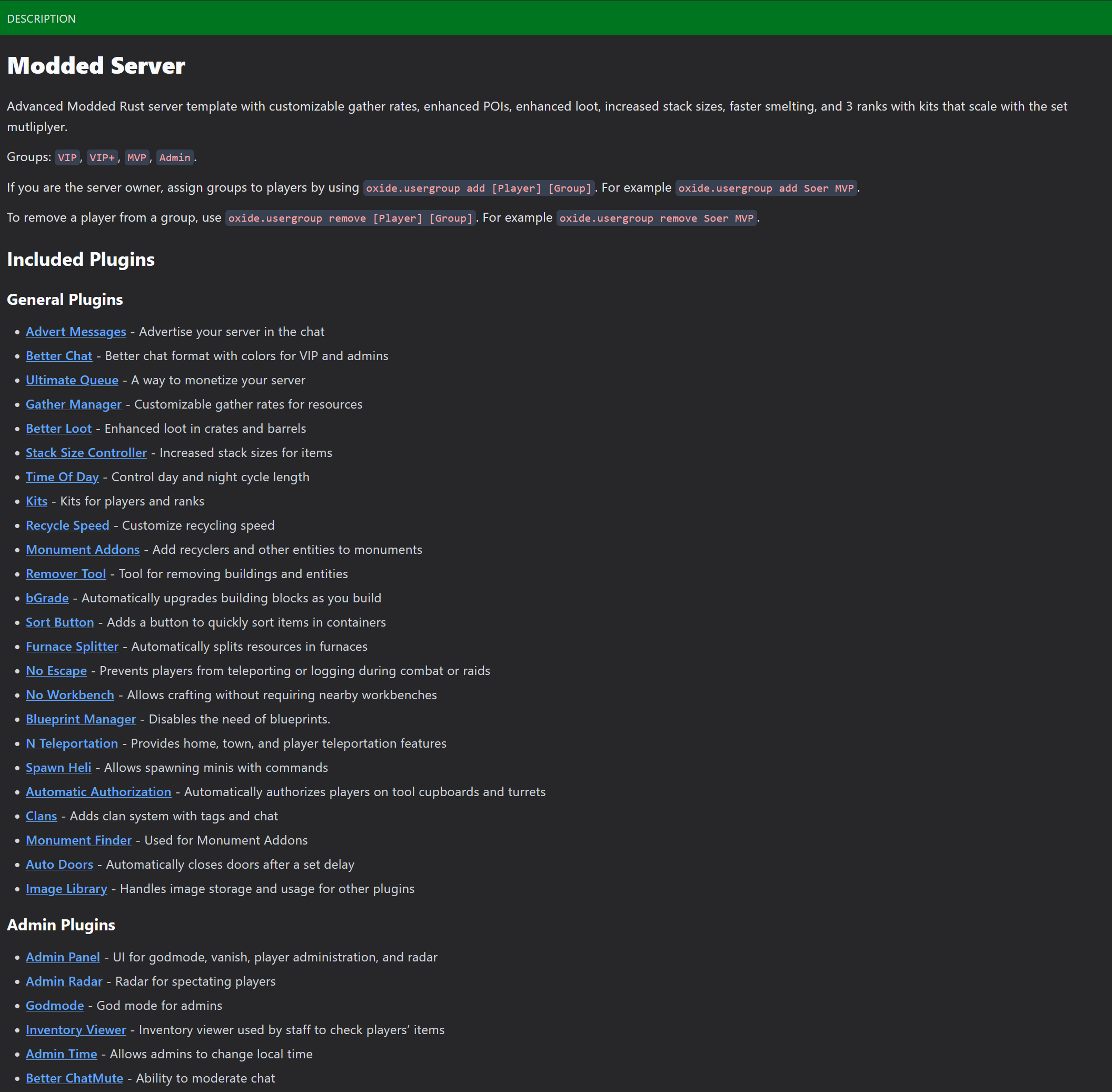
You do not need to search through folders, understand config formatting, or code changes yourself. Gather rates, stack sizes, kits, and other supported features can be managed through the panel UI. Pine Hosting also provides a one-click Rust plugin installer for adding more features later.
Start Your Rust Server With Pine Hosting
Whether you want vanilla survival, a balanced Rust 2x server, fast 5x PvP, peaceful PvE, structured RP, or a completely modded Rust server, Pine Hosting gives you tools to launch and manage it without unnecessary complexity.
With high-performance hardware, DDoS protection, ready-made templates, plugin installation, backups, and a beginner-friendly panel, Pine Hosting is built for owners looking for the best Rust hosting and reliable modded Rust hosting.
Choose your server type, customize it through the panel, and spend more time growing your community instead of editing files.