

Build 42 makes Project Zomboid animal husbandry a real part of long-term survival. You can care for livestock, breed animals and turn a fenced patch of land into a reliable source of food and materials. On a shared Project Zomboid server, it also gives your group something useful to work on between supply runs.
How Animal Husbandry Works In Build 42
Animal husbandry revolves around a designated livestock area, accessible feed and water, and the condition of each animal. Your animals continue to have needs when you travel elsewhere, so a pen that looks fine while you're standing in it might be in trouble when you return from a long loot run.
Start by fencing a practical area with room to move, then open the Designated Zones tool and draw a Livestock Zone over the pen. Include the fec veding area and any shelter or hutch within that zone. Use the zone display and the animal's Animal Info panel to confirm the assignment rather than assuming a fence alone handles everything. The Rancher occupation and Animal Care skill are useful if raising livestock will become a major part of your run.
Which Animals Can You Keep?
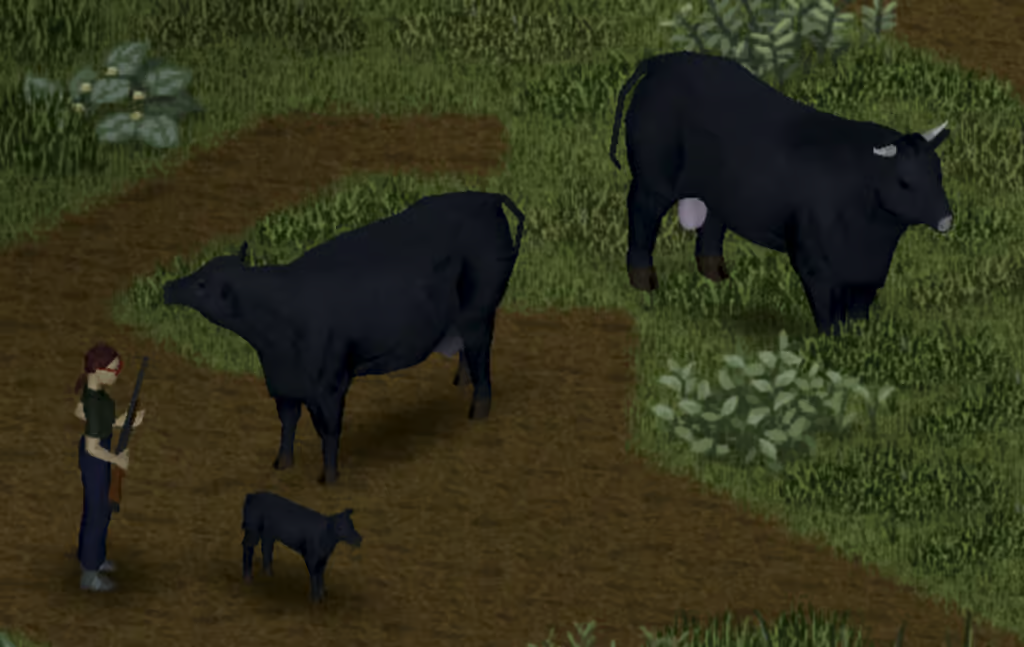
Chickens are a good first choice because hens can provide eggs without slaughtering the flock. Cows are worth keeping if you eventually want milk, although milk production depends on reproduction. Sheep offer wool and can also provide milk, while pigs are more useful for raising a supply of meat. All four make sense on a farm, but they don't have identical care or production routines.
Build 42 also adds wild animals such as deer and rabbits. You can hunt or trap wildlife, but that isn't the same as assigning ordinary farm livestock to a pen. If you're just learning the system, start with a small group of domestic animals and expand once you've built a routine that keeps them healthy.
Where To Find Farm Animals
Look around rural farms, barns, and fenced agricultural properties rather than spending your first search in town. Some farmsteads already have livestock areas, which makes them useful places to study the game's animal setup. Check for troughs, hutches and gates while you're there. The animals you find will depend on your world and where you've explored, so avoid planning a trip around a supposedly guaranteed cow or chicken spawn.
How To Move Animals To Your Base
For a short journey, get close to a suitable animal, open its interaction menu and use the rope option to lead it. Smaller animals, including chickens, can be picked up when the interaction allows it. For longer distances, a livestock trailer is a better choice than trying to walk a cow across zombie-filled roads. Check the trailer's capacity and load the animals through its interaction menu before driving off.
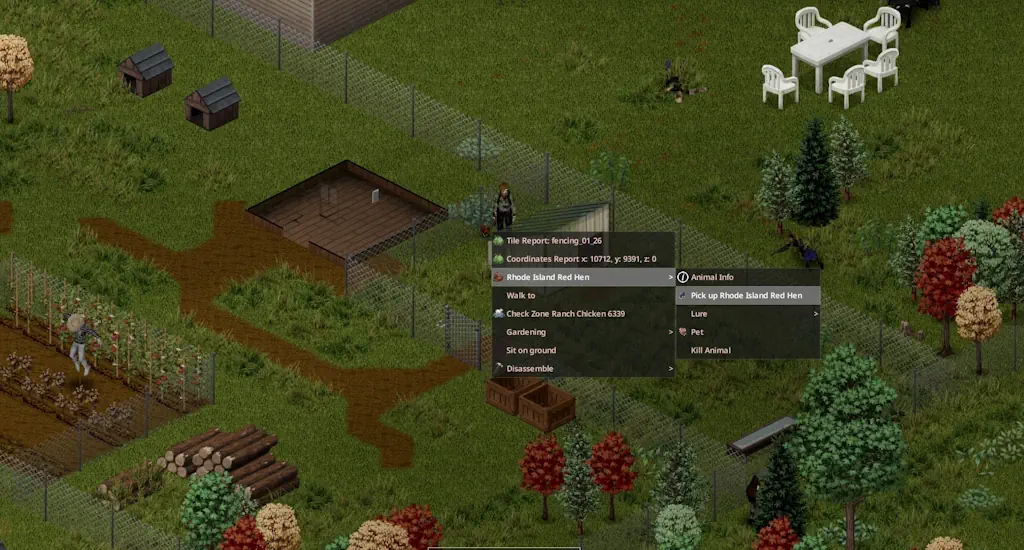
When you arrive, unload the animal inside the prepared pen, confirm its Livestock Zone and look at its condition. Close the gate and check that it can reach the food and water. Moving an animal without checking those last details is an easy way to lose it after a successful trip.
Feeding And Caring For Livestock
Animals need more than a fence. Set out suitable feed in troughs, provide a reachable water source and allow space for grazing where appropriate. Grass is useful for grazing animals, and cut vegetation can help supply feed. Don't assume every animal accepts every item, though. Check the trough's contents and the animal's status before leaving supplies that may not meet its needs.
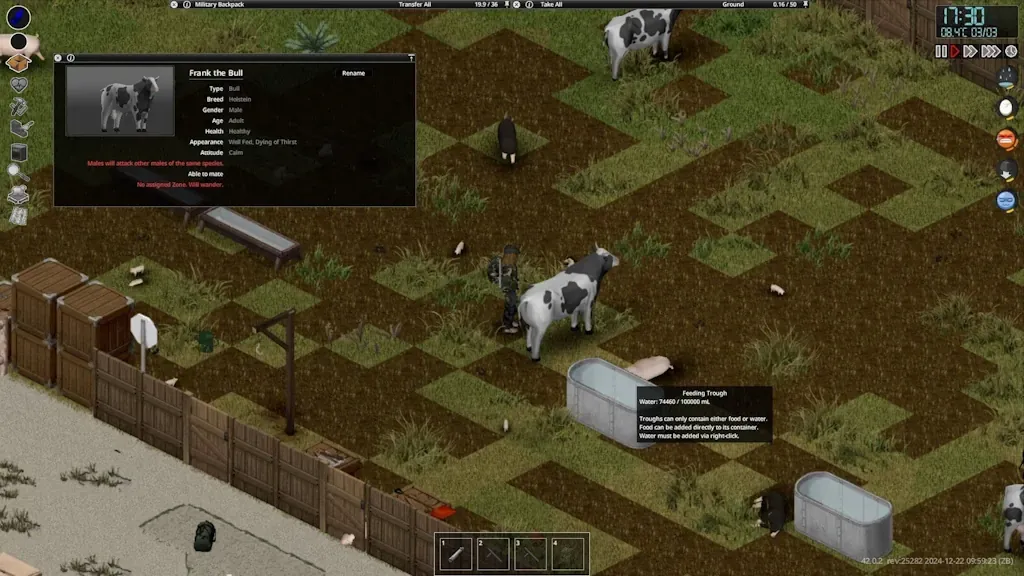
Make a habit of opening Animal Info when you visit the farm. Check health, hunger, thirst and attitude, then look for empty troughs, poor access or anything frightening the herd. Noise, nearby zombies and rough handling can add stress, while neglecting basic needs can leave animals sick or dead. A shelter also gives you somewhere sensible to place feed and protect vulnerable animals.
On a multiplayer Project Zomboid server, split this into simple jobs: one player checks water and feed, another handles crops, and someone collects eggs or milk. That works better than assuming the last person who visited the base did everything.
How Animal Breeding Works
Breeding starts with compatible adult males and females of the same species living in suitable conditions. Keep potential breeding animals in the intended Livestock Zone, give them food and water, and keep stress low. Their age, health and reproductive state matter, so don't expect a new animal to appear immediately just because a pair is standing together.
A rooster allows fertilized chicken eggs, while larger mammals go through pregnancy and produce young. An adult cow won't automatically give you a steady milk supply: reproduction is part of the process, and continued milking or nursing affects lactation. Check Animal Info for the animal's current state rather than relying on a fixed breeding timetable from an old beta guide. Sandbox settings and build changes can affect progression.
How To Collect Eggs, Milk And Other Resources
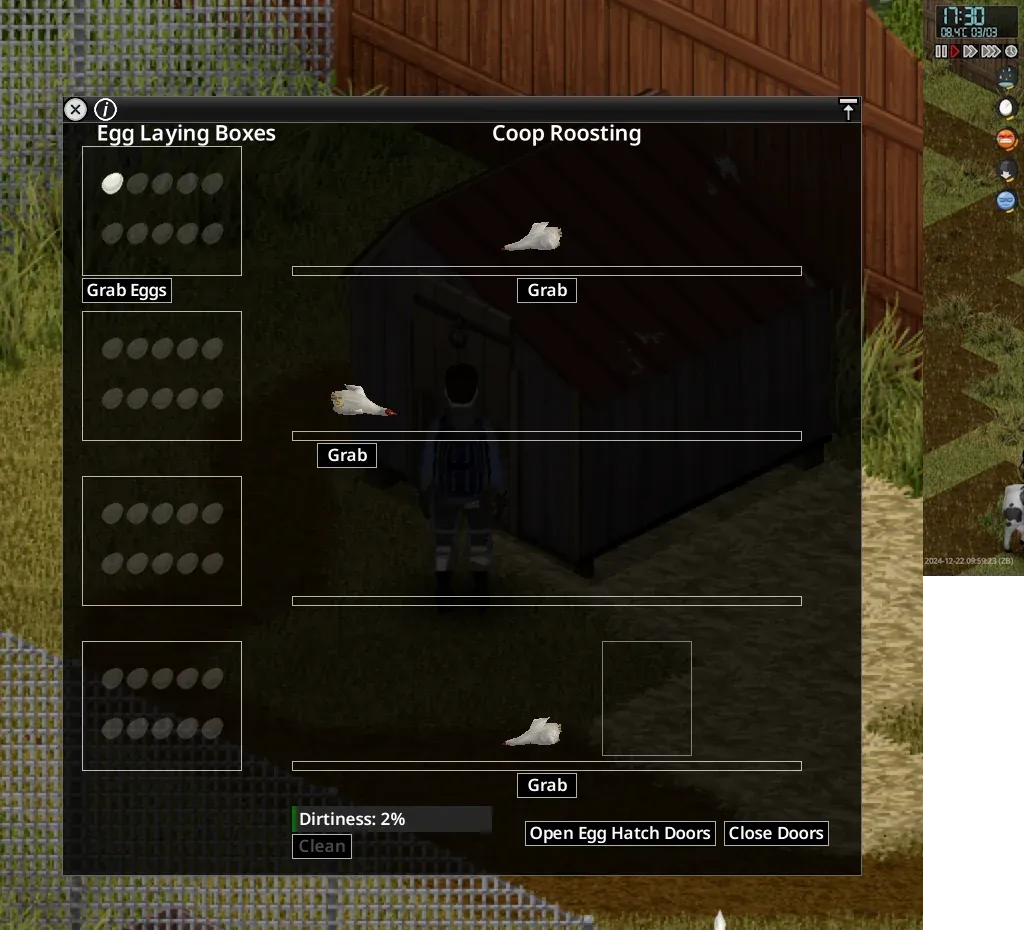
For chickens, place a hutch in the livestock area and inspect its egg boxes. Collect eggs regularly and watch the hutch's cleanliness, since neglected housing can make birds unwell. If you're raising chicks, be mindful that not every egg is simply another meal; fertilized eggs are part of expanding the flock.
For cows and milking sheep, first check whether milk is available, then use the appropriate milking interaction with a suitable container. Sheep can also be shorn when their wool is ready. Livestock can provide manure, and animals raised for meat may also yield useful hides or leather-related materials through butchery. Store fresh animal products promptly and plan which animals to keep for breeding before processing the rest.
Common Animal Farming Mistakes
A common problem is a farm that looks complete but doesn't function as one. A trough outside the marked zone, a blocked route to water or a poorly placed hutch can leave animals struggling even when supplies are nearby. Check the zone outline, the actual container contents and animal info before adding more equipment.
Build A Long-Term Survival Farm With Pine Hosting
A small farm is easier to manage when everyone knows what needs doing. Build a pen near your group's kitchen and crop plots, keep spare feed indoors, and agree on a quick animal-care check before leaving the base. With Project Zomboid hosting on Pine Hosting, your friends can share the same world, divide farm duties, and build on the work you've already done together.